LIMESTONE COLUMN
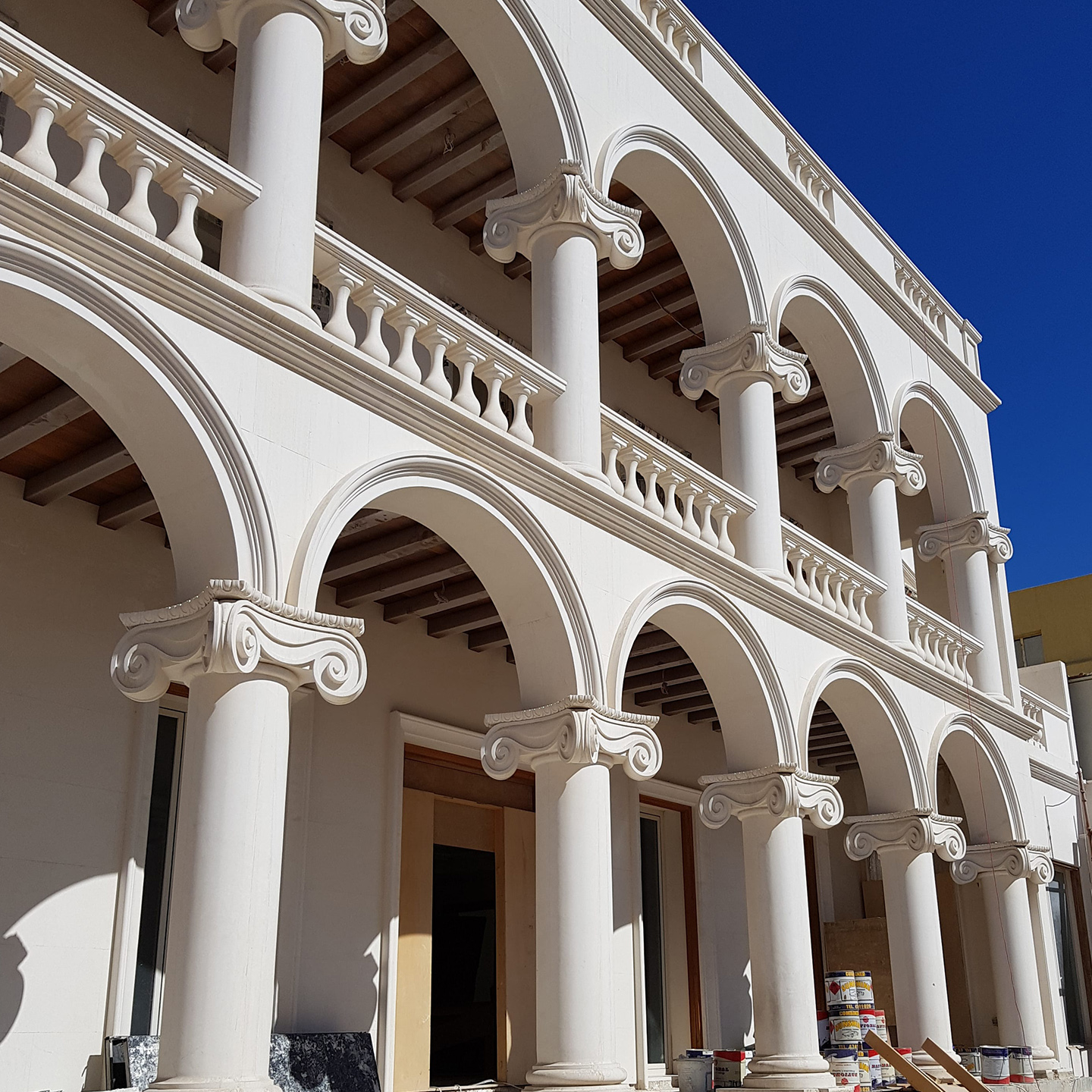
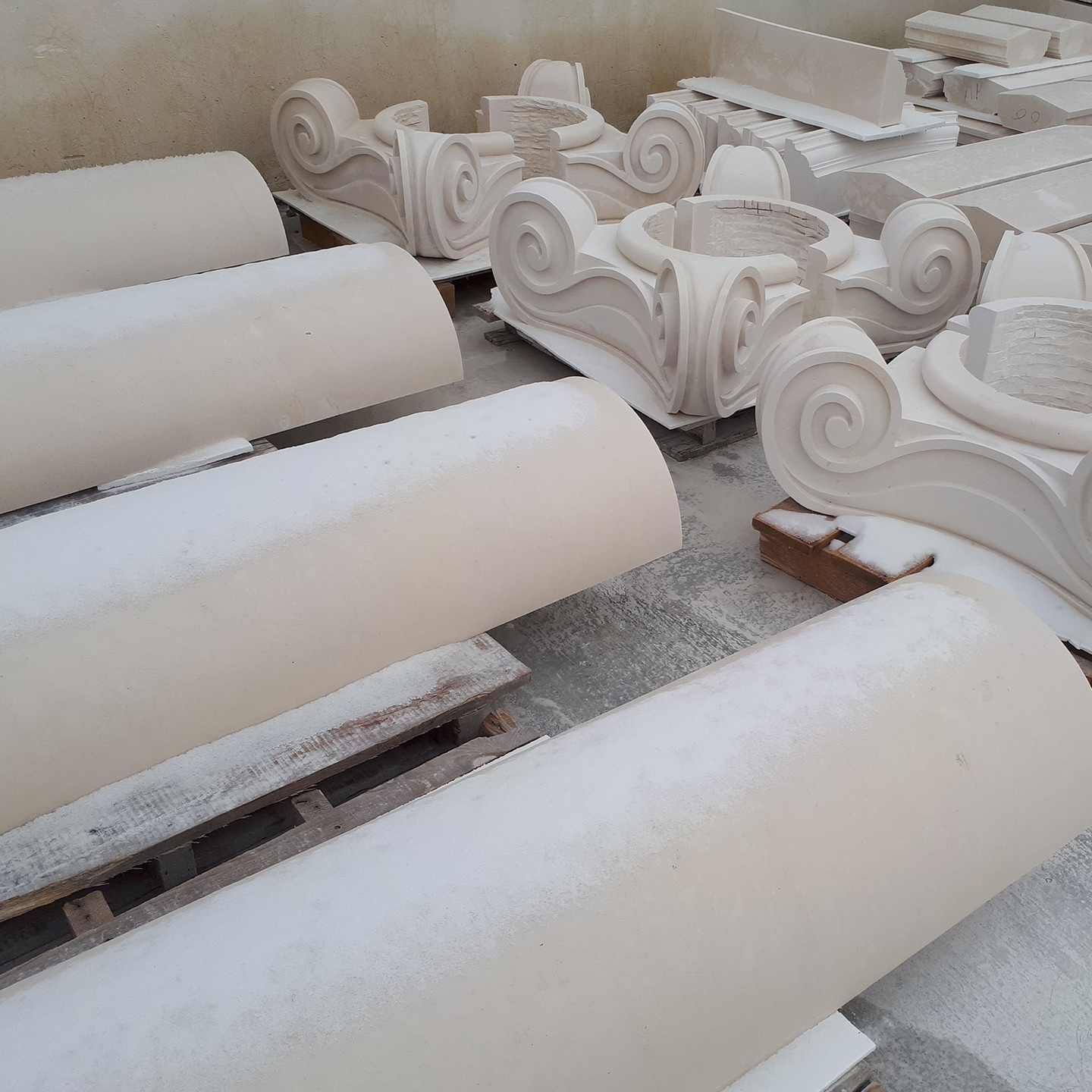

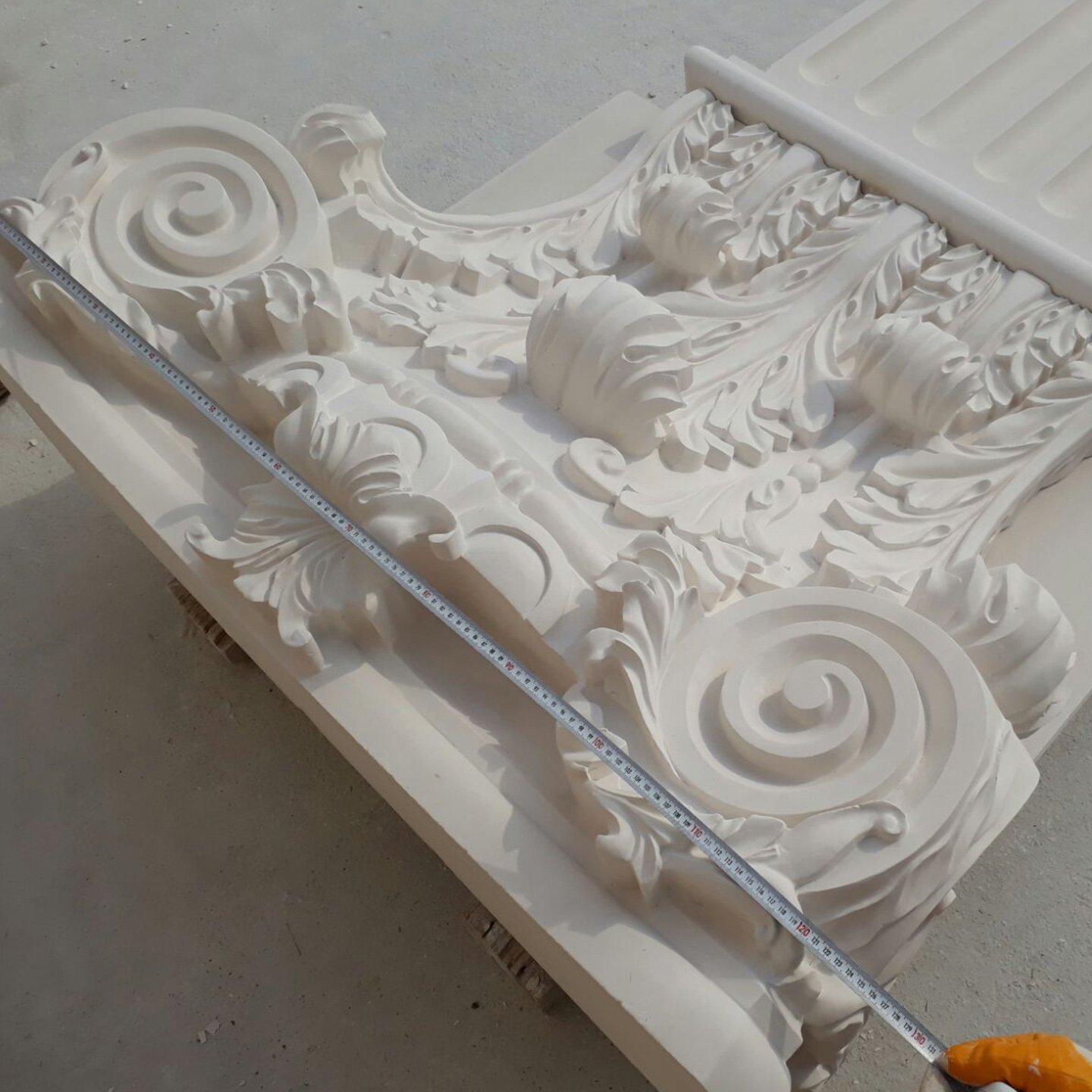
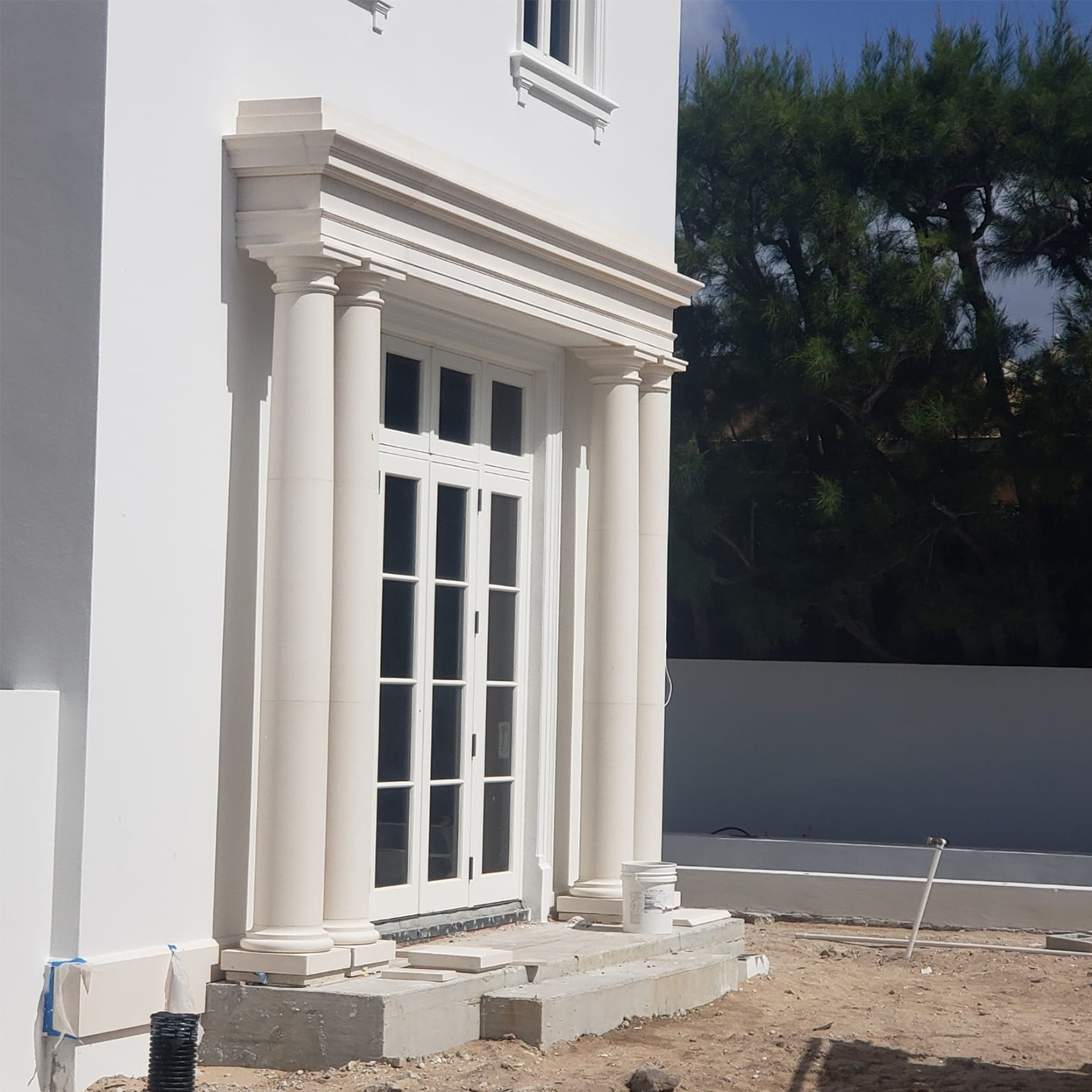


Limestone Column
From Ancient Wonder to Architectural Use: Limestone Column
The first examples of stone columns used to support buildings date back as early as 3000–1000 B.C. This important architectural invention made it possible to create larger open spaces by supporting ceilings, roofs and structural elements without the need for solid walls. Stone columns also allowed more natural light to enter buildings and added a strong aesthetic identity to both exterior and interior architecture.
Today, a limestone column is not only a structural or decorative element. It is also a symbol of classical architecture, timeless design and natural stone craftsmanship. From luxury villas and hotels to public buildings, mansions, gardens and facade projects, limestone columns continue to be widely used in architectural stone design.
Although travertine, marble and granite are also common natural stones that can be used for column production, limestone is generally preferred for architectural stone elements. Its structure allows intricate details to be carved more easily, while also helping architects and builders achieve consistency in large-scale projects. Especially Turkish white limestone columns have become increasingly popular in recent years as part of high-end limestone building projects.
What Is a Limestone Column?
A limestone column is an architectural stone element produced from natural limestone blocks. It can be used as a decorative feature, a facade element, a garden design component or, in some cases, as part of a structural architectural system. In modern projects, limestone columns are often selected for their natural beauty, light color tones, elegant texture and suitability for detailed carving.
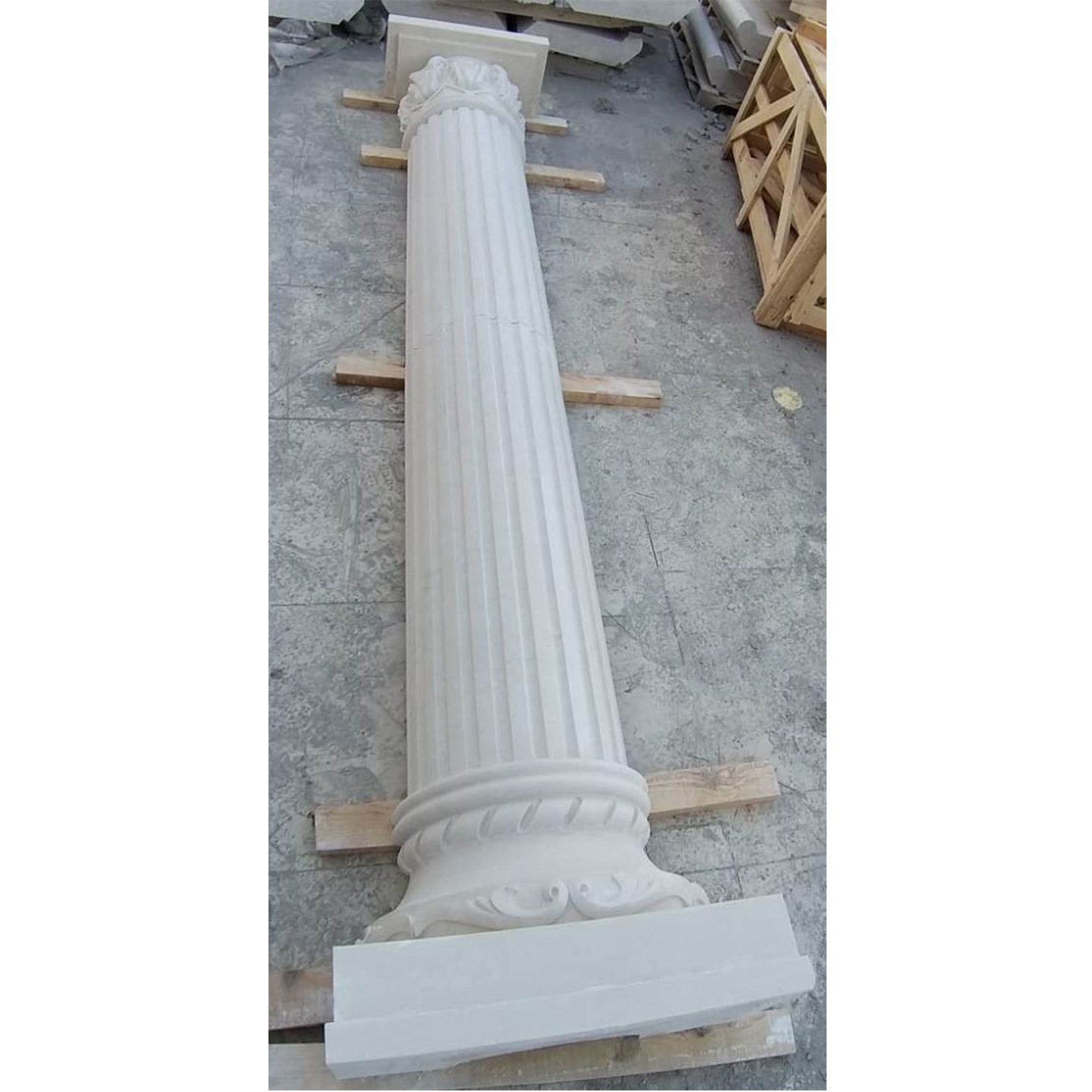
Natural stone columns usually have three main parts: the capital, the body also known as the column shaft, and the base. These three parts can be designed in different proportions, shapes and decorative details according to the architectural style of the project.
Column Capital
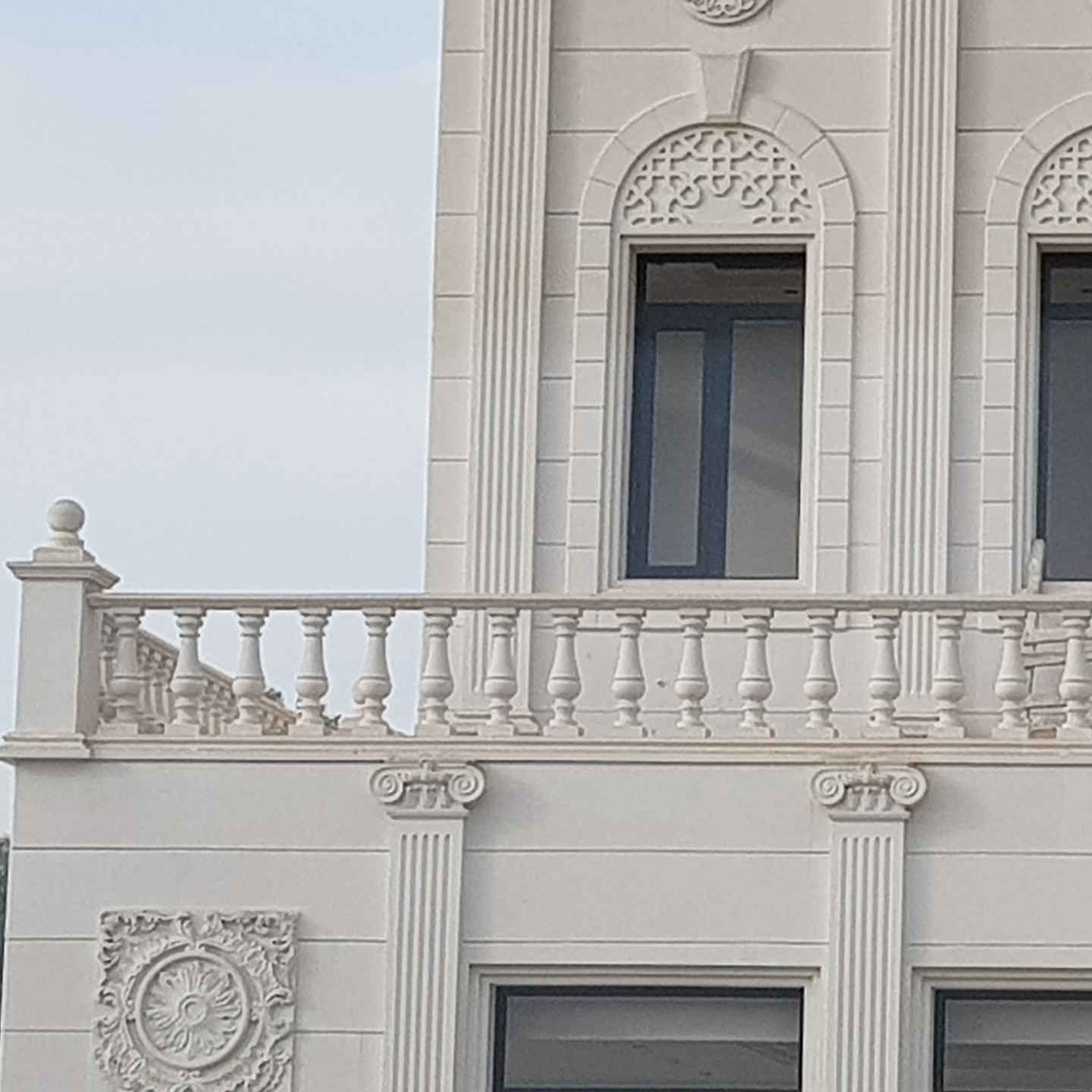
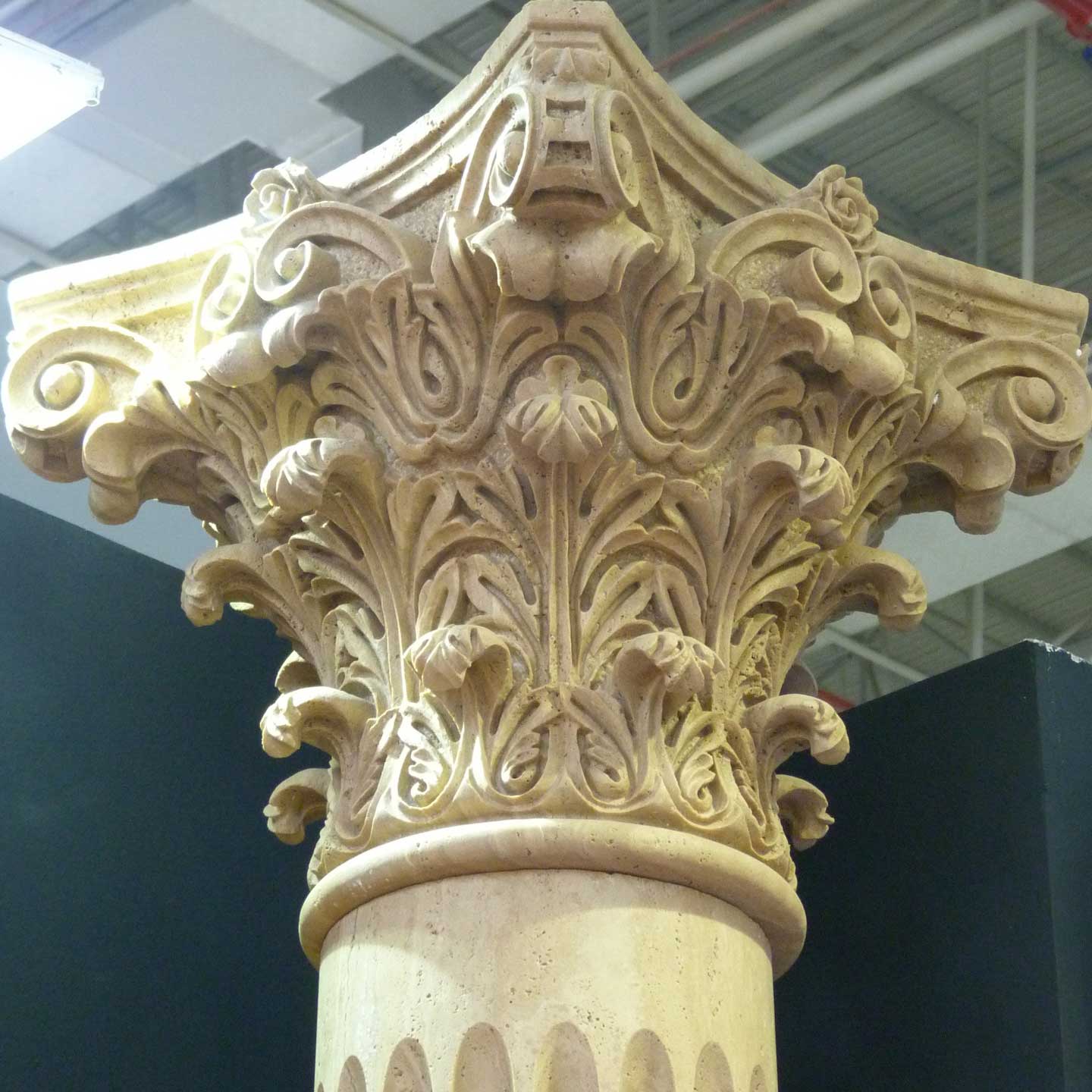
The column capital is the upper part of the column. It is one of the most decorative sections and can be produced with simple, classical or highly detailed carvings. In traditional architecture, capitals may include floral, geometric, Corinthian, Ionic or custom ornamental details.
Column Shaft
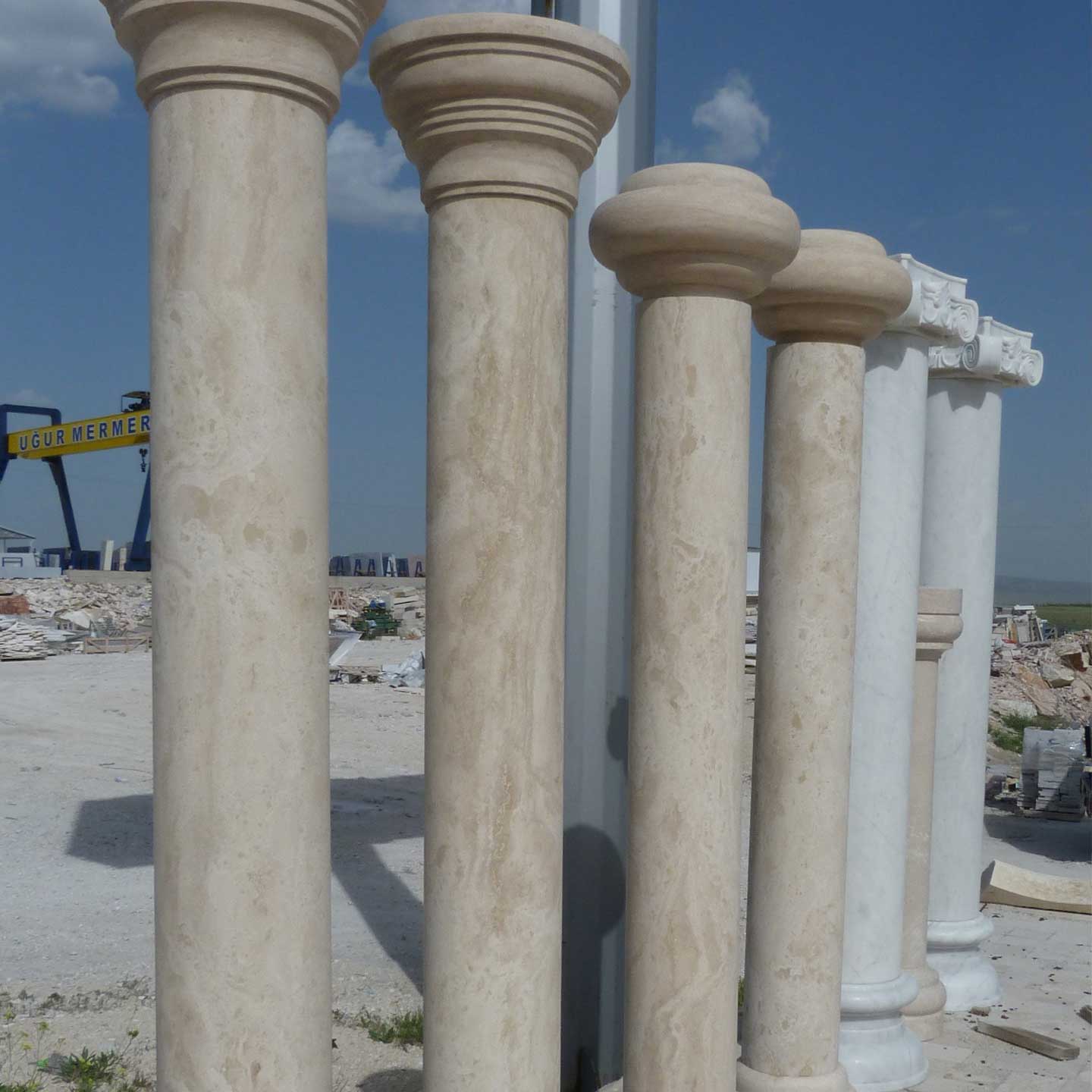
The column shaft is the main body of the limestone column. It can be round, square, plain, fluted or custom-designed. Limestone column shaft faces can be flat or fluted depending on the design concept. A fluted limestone column gives a more classical appearance, while a plain shaft is often preferred in modern and minimalist architectural projects.
Column Base
The base is the lower part of the column and provides visual balance between the column and the floor, pedestal, wall or facade surface. The base can be produced in different heights, profiles and details depending on the design requirements.
Why Limestone Is Preferred for Stone Columns
Limestone is one of the most suitable natural stones for architectural columns because it offers an excellent balance between beauty, workability and durability. Compared with many harder stones, limestone can be shaped and carved with greater detail. This makes it ideal for classical architectural elements, decorative facades and custom stone projects.
For architects, designers and contractors, limestone provides a soft natural appearance that can be used in both traditional and contemporary buildings. Turkish white limestone, in particular, is highly appreciated because of its clean color, elegant surface and ability to create a refined architectural finish.
Natural Beauty and Light Color
White and light beige limestone columns bring brightness and elegance to architectural spaces. Their neutral color makes them suitable for luxury homes, hotels, commercial buildings, villas, gardens, entrance areas and facade cladding projects.
Excellent Carving Performance
Limestone allows detailed carving and profiling, which is very important for column capitals, bases, fluted shafts and custom architectural details. This is one of the main reasons why limestone is widely used for architectural stone elements.
Consistency for Large Projects
Large architectural projects often require multiple columns with consistent color, texture and finish. Turkish limestone can offer good consistency when blocks are selected carefully from the same quarry source and processed under controlled production conditions.
Suitable for Interior and Exterior Applications
Limestone columns can be used both indoors and outdoors when the correct stone type, finish, thickness and installation method are selected. They are suitable for entrance facades, terraces, courtyards, hotel lobbies, garden pavilions, porches and luxury residential projects.
Round and Square Limestone Columns
Depending on the architectural style, stone columns can be produced in different shapes and details. Natural stone columns can be round or square depending on where they will be used and the visual effect required by the project.
Round Limestone Columns
Round limestone columns are commonly used in classical architecture, villa entrances, hotel facades, gardens, courtyards and interior halls. They can be plain or fluted, depending on the design. Round columns usually create a softer and more traditional architectural appearance.
Square Limestone Columns
Square limestone columns are often preferred in modern, Mediterranean and transitional architectural projects. Their straight lines provide a clean and strong visual effect. Square limestone columns can be used for facades, porches, garden walls, entrance gates and exterior architectural compositions.
Fluted Limestone Columns
Fluted limestone columns include vertical grooves on the column shaft. This detail is widely associated with classical architecture and gives the column a more elegant and historical appearance. Fluted limestone columns are especially suitable for luxury villas, mansions, public buildings and restoration-style projects.
Plain Limestone Columns
Plain limestone columns have a smooth shaft without grooves. They are suitable for modern and minimalist projects where the architect wants the natural beauty of limestone without excessive ornamentation.
Hollow Limestone Columns for Modern Projects
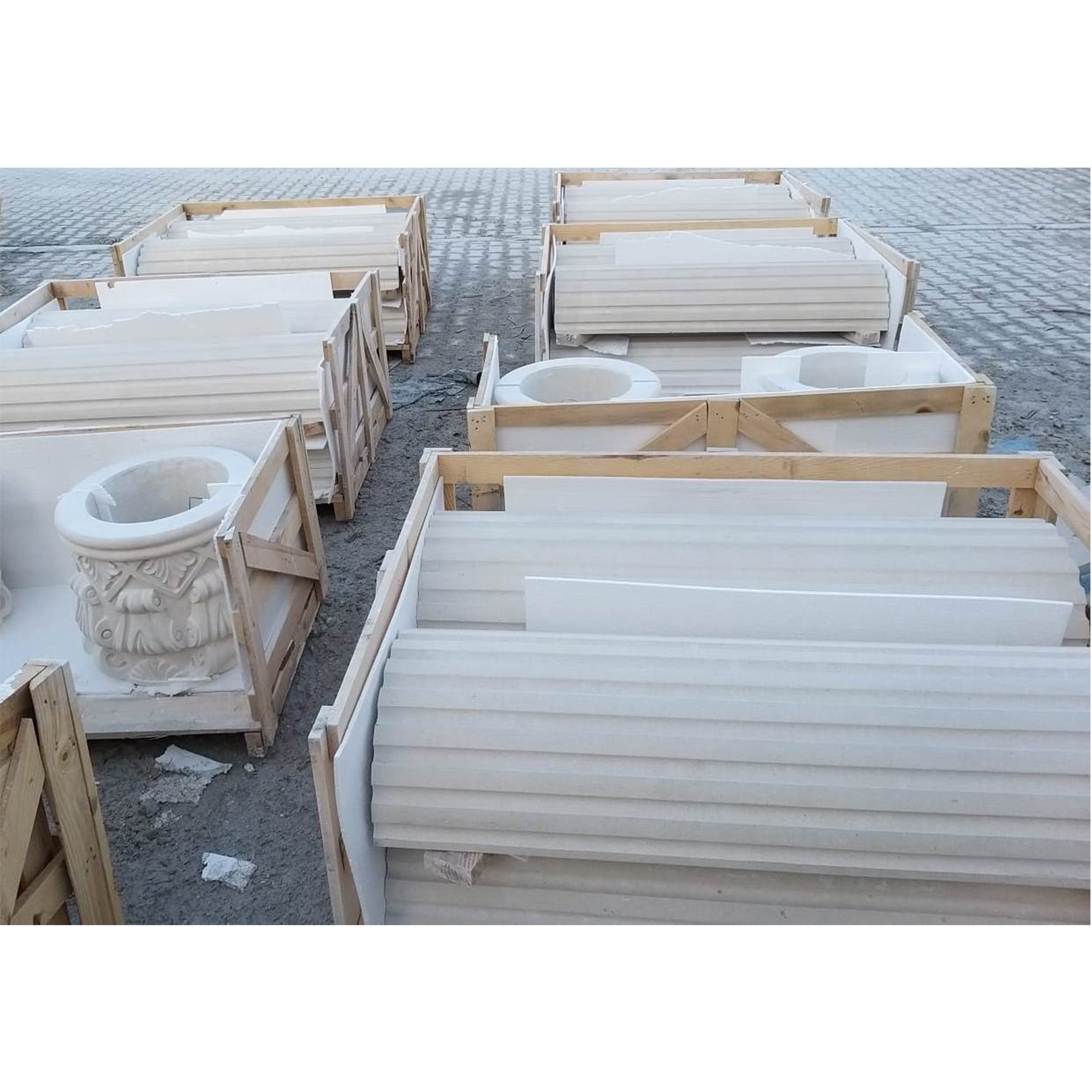
Today, limestone columns are often used for aesthetic purposes rather than to support heavy ceilings or beams. For this reason, stone columns can be produced as hollow elements to cover steel poles, reinforced concrete elements or technical structural supports.
Hollow limestone columns provide the visual appearance of a solid natural stone column while allowing modern structural systems to be hidden inside. This solution is especially useful for villas, hotels, entrance canopies, exterior facades and renovation projects.
Applications of Limestone Columns
Limestone columns can be used in many different architectural and landscape applications. Their timeless appearance makes them suitable for both new construction and restoration-inspired projects.
Limestone Columns for Building Facades
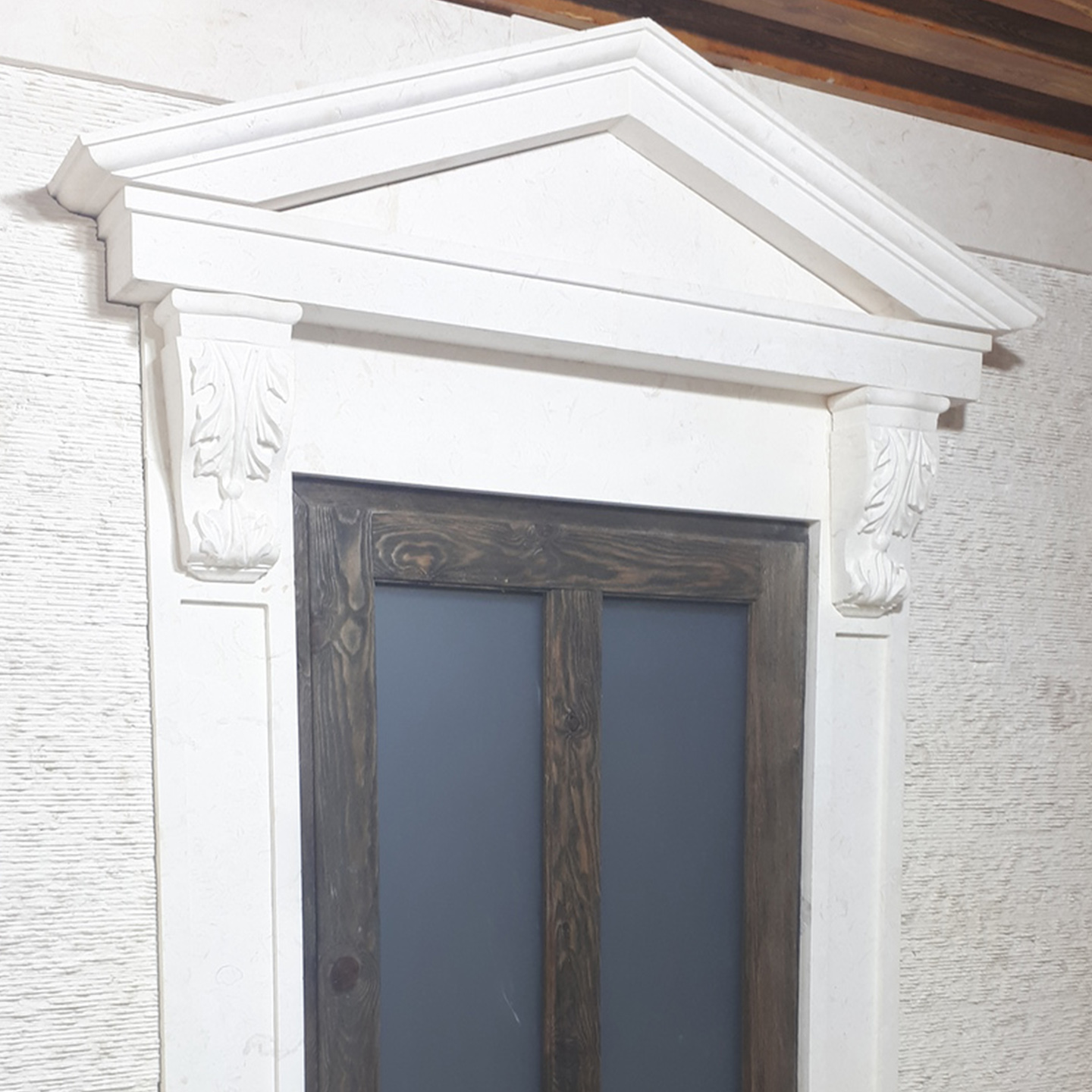
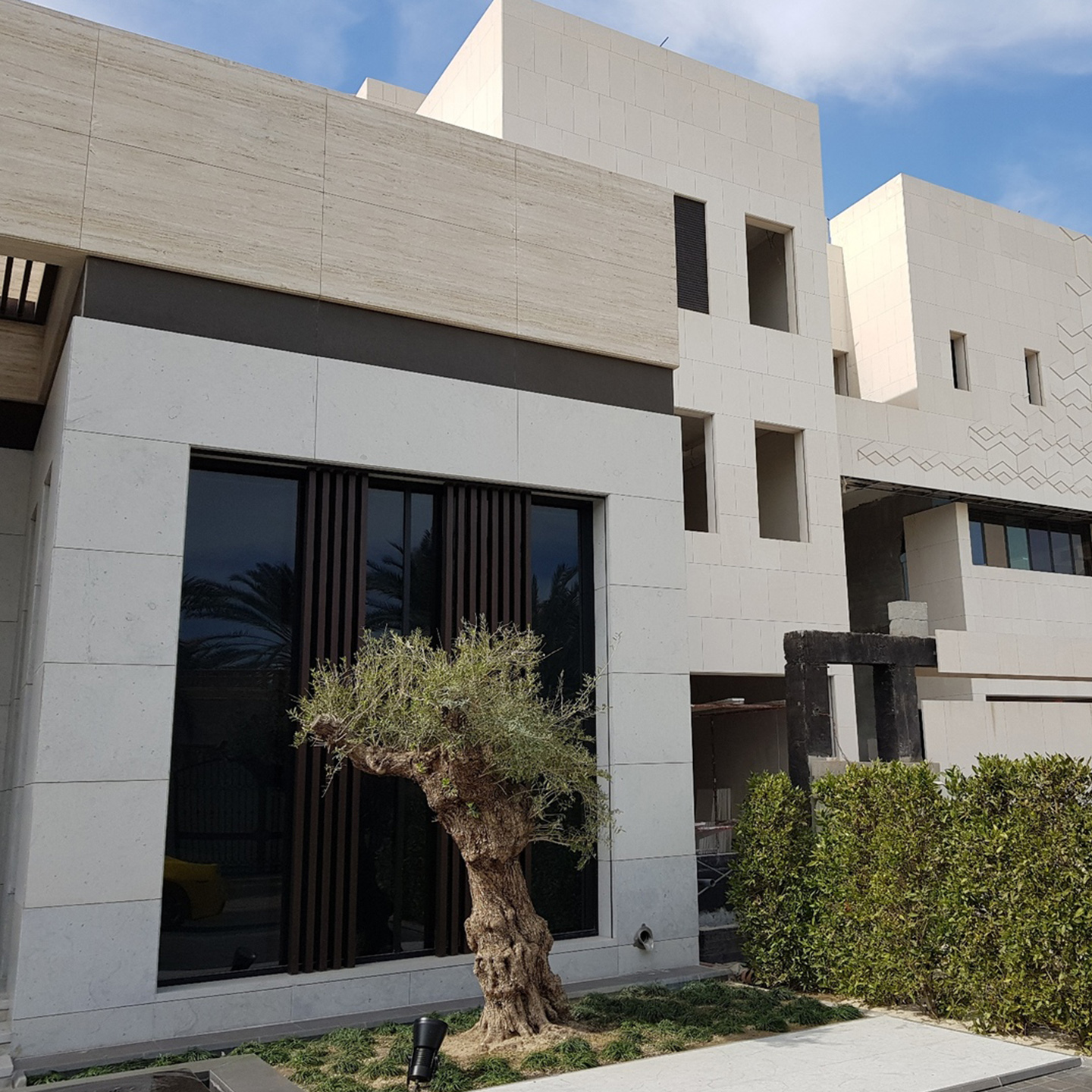
Limestone columns are frequently used on building facades to create depth, rhythm and architectural character. They can frame entrances, support visual compositions and complement limestone wall cladding, pediments, window surrounds and door frames.
Limestone Columns for Villa Entrances
Luxury villas often use limestone columns at the entrance, porch, terrace or garden area. White limestone columns create a prestigious and elegant first impression, especially when combined with natural stone flooring, stairs and facade cladding.
Limestone Columns for Hotels and Resorts
Hotels and resorts use limestone columns to create a refined and high-end architectural atmosphere. They can be used in lobbies, pool areas, courtyards, exterior entrances, garden structures and hospitality facades.
Limestone Columns for Gardens and Landscaping
Limestone columns can also be used as decorative landscape elements. They may be part of pergolas, garden gates, fountains, pavilions, wall systems or outdoor seating areas. Their natural texture blends well with plants, water features and other natural stone elements.
Limestone Columns for Restoration and Classical Architecture
For restoration-style projects, limestone is a strong choice because it can be shaped into classical profiles, capitals, bases and fluted shafts. It can help reproduce traditional architectural details while maintaining the beauty of natural stone.
Turkish White Limestone Columns
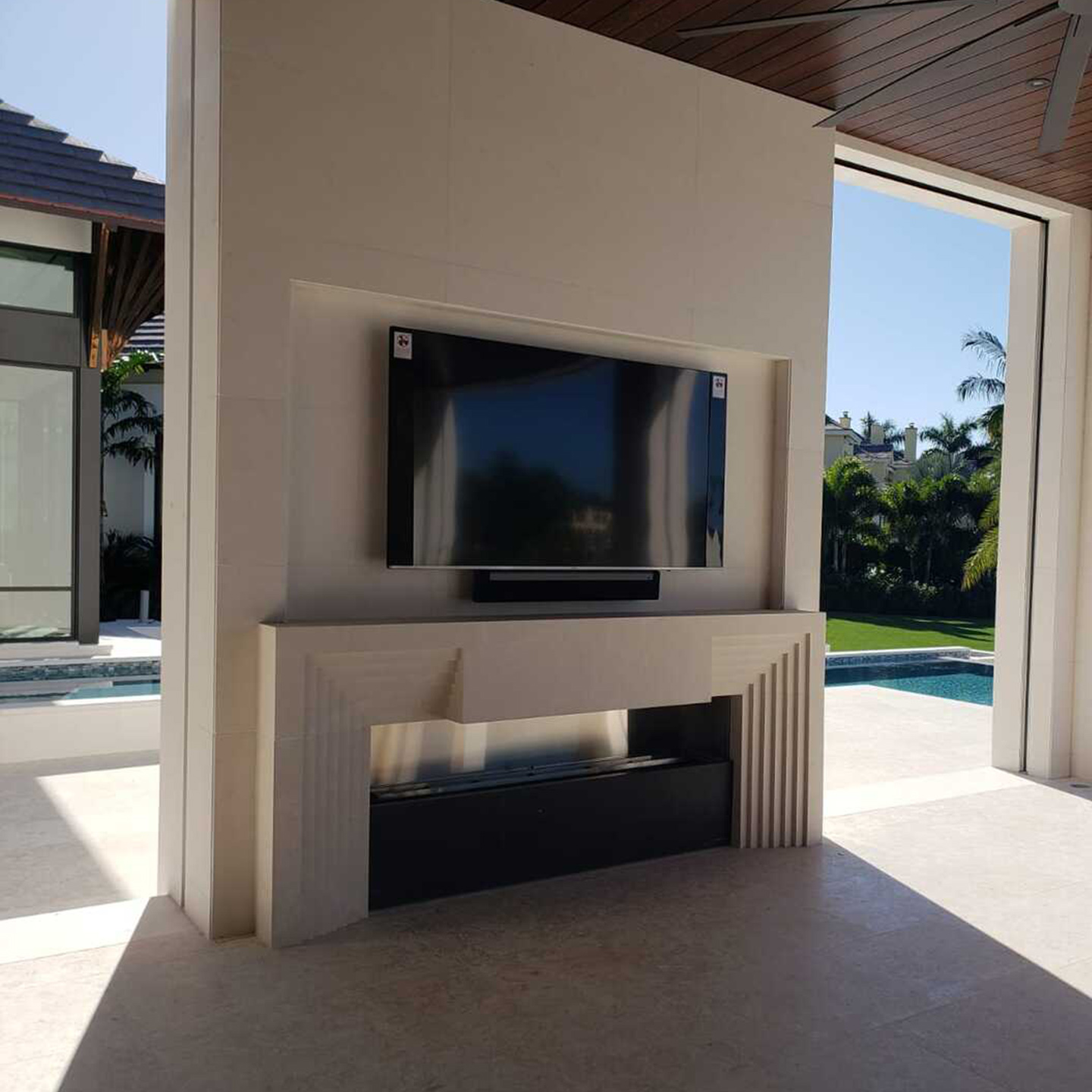
Turkish white limestone columns are especially attractive for international architectural projects because of their elegant color, clean texture and natural stone character. White limestone from Turkey is widely used for facade cladding, columns, balustrades, window surrounds, door frames, stairs, fireplace surrounds and other custom architectural stone elements.
For projects in the USA, Canada, Europe and the Middle East, Turkish limestone columns can offer a refined alternative to other natural stones. Their light color works well with classical architecture, Mediterranean design, modern villas, commercial buildings and luxury hospitality projects.
Custom Limestone Column Production
Every architectural project has different design requirements. For this reason, limestone columns can be produced in custom dimensions, shapes, profiles and surface finishes. The design can be based on architectural drawings, project details, 3D models or sample references.
Custom Sizes
Limestone columns can be produced in different heights, diameters and section sizes according to the project. Both small decorative columns and large architectural columns can be manufactured depending on the stone block availability and engineering requirements.
Custom Profiles and Details
Column capitals, bases and shafts can be designed with simple or detailed profiles. Classical, modern, Mediterranean and custom architectural styles can all be produced from limestone.
Surface Finish Options
Limestone columns can be finished in different ways depending on the design. Honed, brushed, sandblasted, chiseled or custom finishes may be selected according to the visual style and project requirements.
Likya Royal Limestone Column Supply
Our white limestone factory and quarry in Turkey is one of the leading sources of high-end limestone, marble and travertine architectural building facade cladding projects. We have completed many projects in the Middle Eastern countries, Europe, Canada and the USA.
Likya Royal supplies custom limestone columns and architectural limestone elements for international projects. We support architects, contractors, builders, designers and natural stone importers with product selection, technical details, project-based production and export preparation.
In addition to limestone columns, we can also supply related architectural stone elements such as column capitals, balustrades, window sills, door frames, stairs, wall caps, pediments and exterior wall cladding.
Why Choose Likya Royal for Limestone Columns?
Choosing the right limestone supplier is important for architectural projects. Natural stone columns require careful block selection, accurate cutting, detailed carving, proper finishing and strong packing for international shipment.
Experience in Architectural Limestone Elements
Likya Royal has experience in producing and supplying architectural limestone elements for different project types. Our limestone columns can be produced according to project drawings and architectural requirements.
Turkish White Limestone Source
Our limestone source in Turkey allows us to supply white and light-colored limestone products for international architectural projects. Turkish white limestone is suitable for both classical and modern designs.
Project-Based Production
We can produce limestone columns according to custom measurements, profiles, finishes and design details. This makes it possible to match the requirements of villas, hotels, commercial buildings and landscape projects.
Export Support
We support international buyers with production coordination, quality control, packing and export preparation for limestone column orders.
Request a Quote for Limestone Columns
If you are planning a project that requires limestone columns, Turkish white limestone columns or custom architectural stone elements, Likya Royal can support your sourcing process from Turkey.
To receive an accurate quotation, please share your project drawings, column dimensions, quantity, preferred stone color, surface finish, delivery location and any special architectural details.
Contact Likya Royal today to request limestone column prices, production details and export options for your architectural project.
Get a quote now or explore our full range of architectural limestone elements.
Frequently Asked Questions About Limestone Columns
What is a limestone column?
A limestone column is an architectural stone element produced from natural limestone. It can be used for decorative, structural-looking or facade applications in villas, hotels, public buildings, gardens and luxury architectural projects.
Are limestone columns structural?
In traditional architecture, stone columns could be used to support loads. Today, many limestone columns are used mainly for aesthetic purposes. They can also be produced as hollow elements to cover steel or concrete structural supports.
What are the main parts of a stone column?
A natural stone column usually consists of three main parts: the capital at the top, the shaft or body in the middle, and the base at the bottom.
Can limestone columns be made hollow?
Yes. Limestone columns can be produced as hollow pieces to cover steel poles, reinforced concrete supports or other structural elements. This allows the project to combine modern engineering with natural stone aesthetics.
Can limestone columns be used outdoors?
Yes. Limestone columns can be used outdoors when the correct stone type, finish, installation method and maintenance approach are selected according to the project environment.
What shapes are available for limestone columns?
Limestone columns can be produced in round, square, fluted, plain or custom shapes. The final design depends on the architectural style and project requirements.
Why is limestone preferred for architectural columns?
Limestone is preferred because it is natural, elegant, workable and suitable for detailed carving. It allows the production of capitals, bases, fluted shafts and custom profiles with refined architectural detail.
What is the difference between limestone, marble and travertine columns?
Limestone, marble and travertine are all natural stones. Limestone is often preferred for detailed architectural carving and consistent large projects. Marble usually has a more polished and veined appearance, while travertine has a more porous and textured character.
Can Likya Royal produce custom limestone columns?
Yes. Likya Royal can produce custom limestone columns according to project drawings, sizes, profiles, finishes and design requirements.
How can I get a price for limestone columns?
To receive a price, you should provide column dimensions, quantity, stone type, surface finish, design details, drawings if available, and the delivery location. Likya Royal can prepare a project-based quotation according to these details.